

XR Product Demo: A Practical Guide for B2B Brands
Sean Keogh · 16 Jul 2025 · 2 min read
XR Integration StrategiesB2B companies are increasingly exploring XR product demos to make their sales and marketing experiences more engaging, memorable, and effective. With trade fairs evolving and remote decision-making on the rise, XR offers an exciting opportunity to turn product presentations into immersive brand experiences. But what makes an XR product demo truly effective — and how do you avoid falling into the “virtual PowerPoint” trap?
At headroom, we help organisations understand how to integrate XR storytelling into their sales strategies in a way that delivers real business value. Here’s a practical guide for B2B brands getting started.
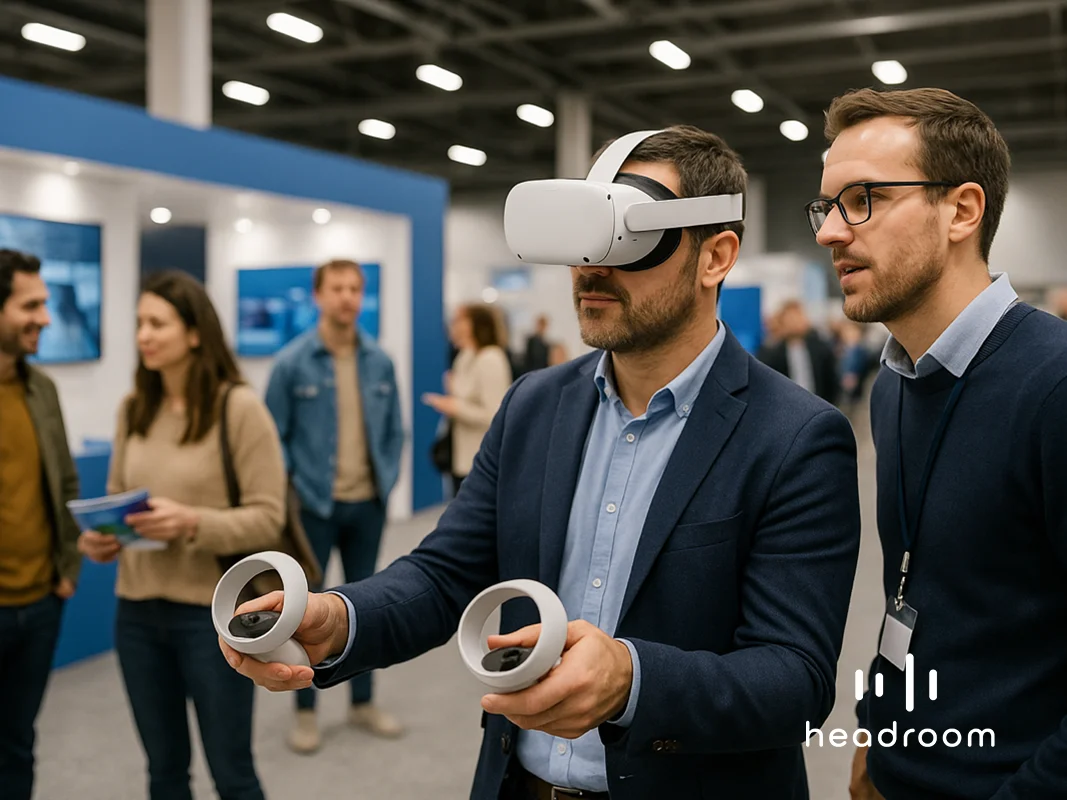
Take your customers into an engaging interactive product demo using XR tech
Start with the Story, Not the Specs
A common pitfall in XR product demos is simply replicating a feature list in 3D. But XR shines when it tells a story. Start by defining the customer’s problem and then build your XR experience around the solution your product provides.
Consider using interactive journeys: what challenge does your customer face, and how can your product be the “hero”? Story-driven XR demos are more likely to be remembered and linked to purchase intent.
Choosing the Right Format for Your XR Product Demo: VR, AR, or Mixed Reality?
Not every XR product demo needs to be fully immersive. The choice between VR (Virtual Reality), AR (Augmented Reality), or Mixed Reality (MR) depends on your goals and audience.
- VR: Great for fully immersive, high-impact experiences. Ideal for complex machinery, product walkthroughs, or trade fair booths where visitors can step into your product world.
- AR: Best for lighter experiences accessible on phones or tablets. Perfect for enhancing brochures or adding interactive layers to physical displays.
- Mixed Reality: Emerging tools like Apple Vision Pro and Magic Leap blend digital overlays with the real world, useful for collaborative demos or field sales scenarios.
At headroom, we consult on what fits best within your sales funnel and event strategy, ensuring your XR product demo is practical and effective.
Prioritise Interaction Over Passive Viewing
A common mistake in XR demos is making them too passive — essentially a glorified video. The real power of XR lies in interaction. Consider features like:
- Product customisation options
- Guided feature explorations
- Scenario-based decision-making flows
- Gamified product challenges
Interactive experiences boost engagement, dwell time, and recall, all of which contribute to better lead qualification and sales outcomes.
Connect XR Product Demos to Your Sales Process
Even the most engaging XR product demo is wasted if it doesn’t connect to your wider sales process. Think beyond the moment of interaction:
- How will leads be captured during or after the XR experience?
- Can usage data inform lead scoring?
- Are there automated follow-ups (e.g., personalised product brochures sent after the demo)?
At headroom, we guide clients on integrating XR experiences seamlessly with CRM systems and post-demo sales workflows.
XR Product Demos: Small Steps to Big Impact
An effective XR product demo doesn’t need to be complicated or expensive. It needs to be purposeful: designed around your customer’s needs, aligned with your sales goals, and integrated into your broader marketing ecosystem.
If you’re considering how XR storytelling could create more impact for your product presentations, we’d love to help you explore the options.