

What is Extended Reality? A glossary
Sean Keogh · 10 Jul 2024 · 3 min read
XR Integration Strategies
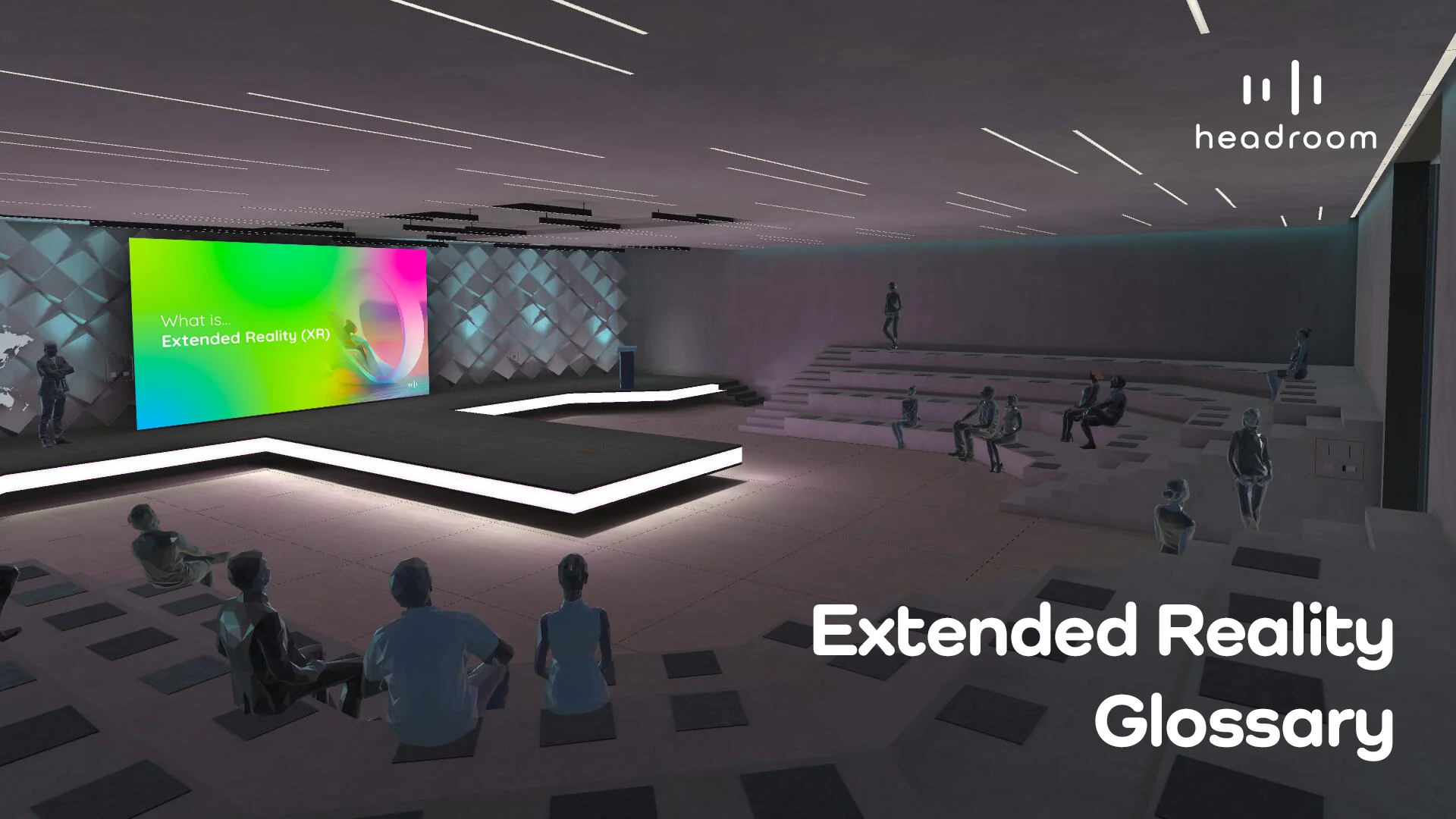
We usually like to do this direct in VR - this is one of RAUM’s beautiful spaces…
Extended Reality (XR)
What is Extended Reality (XR)?
Extended Reality is an umbrella term encompassing virtual reality (VR), augmented reality (AR), and mixed reality (MR). It represents all real-and-virtual combined environments and human-machine interactions generated by computer technology and wearables.
Virtual Reality (VR)
What is Virtual Reality (VR)?
A simulated experience that can be similar to or completely different from the real world. VR typically involves the use of a VR headset to generate realistic images, sounds, and other sensations that simulate a user’s physical presence in a virtual environment.
What is a VR Headset?
A device worn on the head that provides virtual reality experiences through built-in displays and motion tracking sensors.
What is an HMD (Head-Mounted Display)?
A display device worn on the head that has small screens in front of the eyes, often used in VR applications.
What is 360-degree Video?
A video recording where a view in every direction is recorded at the same time, shot using an omnidirectional camera or a collection of cameras.
What is Immersive Audio?
Sound that enhances the sense of presence in a virtual environment by mimicking the way we hear sound in the real world, often using spatial audio techniques.
Augmented Reality (AR)
What is Augmented Reality (AR)?
An interactive experience where real-world environments are enhanced by computer-generated perceptual information, sometimes across multiple sensory modalities, including visual, auditory, haptic, somatosensory, and olfactory.
What are AR Glasses?
Wearable devices that overlay digital content onto the real world, often used in industrial, medical, and consumer applications.
What is a Head-Up Display (HUD)
A transparent display that presents data without requiring users to look away from their usual viewpoints, often used in AR applications.
Mixed Reality (MR)
What is Mixed Reality (MR)?
The merging of real and virtual worlds to produce new environments where physical and digital objects co-exist and interact in real-time.
What are Spatial Anchors?
Fixed points in a mixed reality environment that digital objects can be tied to, allowing them to stay in the same place as the user moves around.
General XR Terms
What is Spatial Computing?
A technology that allows users to interact with a three-dimensional virtual space through devices such as VR headsets or AR glasses.
What is a Digital Twin?
A digital replica of a physical entity, such as a product or system, that is used for simulation, analysis, and control.
What is Immersive Learning?
An advanced form of active learning that creates a fully simulated environment for education and training, often using VR or AR.
What is a Tethered Headset?
A VR headset that is connected to a PC or console via cables, offering higher processing power and better graphics.
What is a Standalone Headset?
A self-contained VR headset that does not require a PC or console to operate, offering greater portability and ease of use.
What is a Screenless Viewer?
A device that uses a smartphone to create a VR experience, typically less powerful than dedicated VR headsets but more accessible.
Usage and Applications
What is Remote Assistance?
Using XR technologies to provide remote support and guidance, often used in industrial and maintenance applications.
What is Virtual Collaboration?
Using VR and AR for remote meetings and collaborative work, enhancing communication and productivity.
What are Training Simulations?
VR and AR applications designed to train individuals in various fields, such as medical procedures, military operations, or customer service, by simulating real-world scenarios.
What are Interactive 3D Models?
Digital representations of objects that can be interacted with in a virtual environment, used for education, design, and training.
Industry-specific Terms
What is Enterprise VR?
Virtual reality applications used within businesses to enhance productivity, training, and collaboration.
What is Consumer VR?
Virtual reality applications designed for personal use, such as gaming, entertainment, and social interaction.