

VR Collaboration and the Future of Remote Work: Bridging the Physical Distance
Sean Keogh · 8 May 2024 · 2 min read
Future Trends
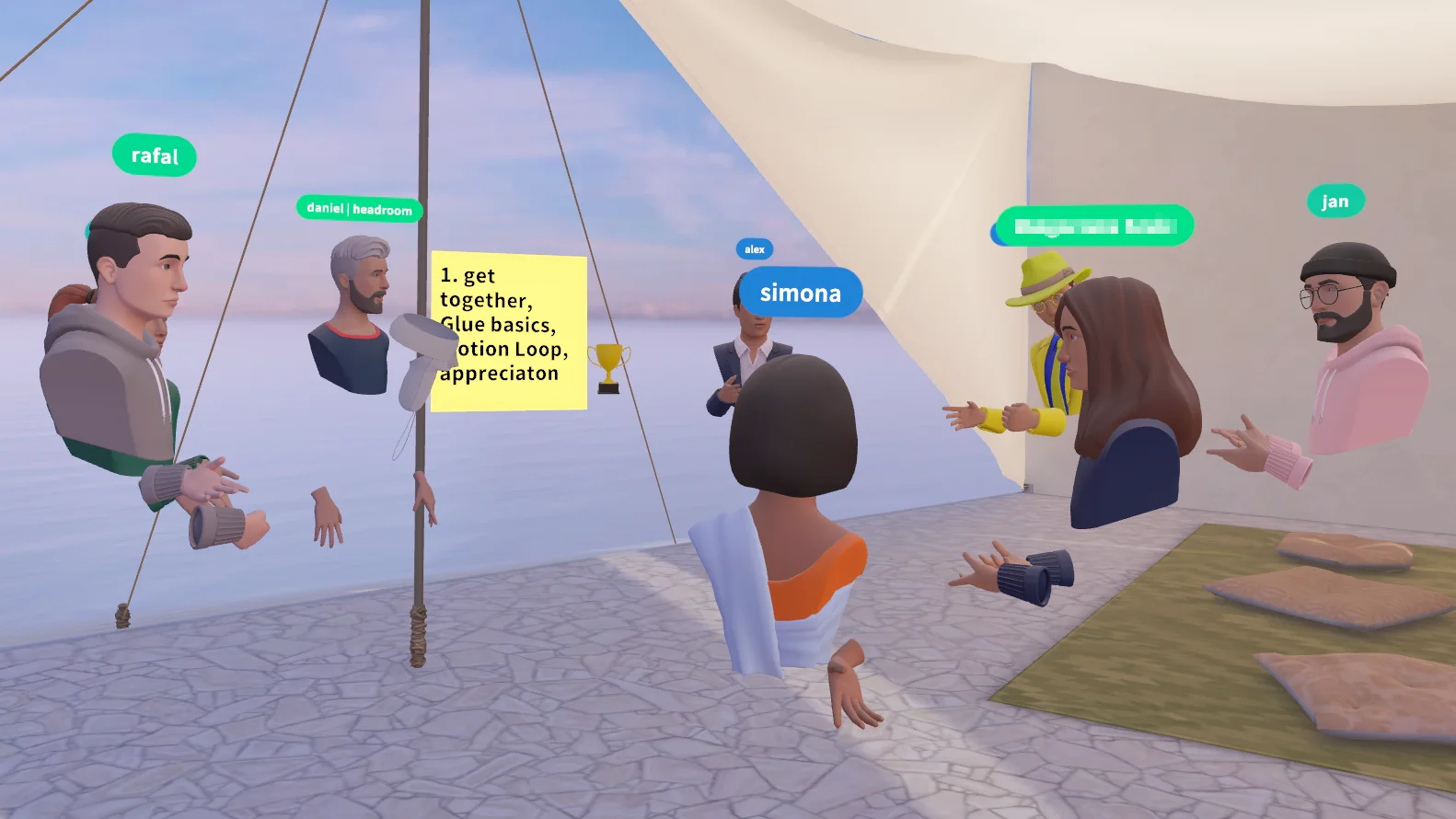
A real-world team in a headroom Thinking Session in Virtual Reality
The transformation of the workplace in recent years has been profound. As more organizations embrace remote work, the need for effective tools that not only enhance productivity but also foster personal connections has become crucial. Virtual Reality (VR) stands out as a potent solution, offering more than just a way to work; it redefines how we connect and collaborate across distances.
Traditional remote work tools have often fallen short in simulating the nuances of in-person interactions, leading to a sense of isolation and disengagement among teams. VR, however, brings a new dimension to remote collaboration. By immersing team members in a shared virtual environment, VR creates a sense of presence that video calls and chat apps cannot replicate. This simulated presence can significantly reduce the feelings of separation, making team members feel like they are sitting in the same room, despite being miles apart.
The capabilities of VR extend beyond just visual and auditory immersion. Advanced VR platforms enable participants to engage with digital objects and environments in intuitive ways, closely mimicking real-life interactions. This can include everything from virtual whiteboarding sessions to 3D model manipulations, all within a space that supports natural human gestures and communications. Such interactions are not just about completing tasks; they are about creating an emotional and psychological connection among team members, fostering a collaborative spirit that is often lost in traditional remote work setups.
Moreover, VR’s flexibility in creating customizable environments means that any team can design their virtual workspace to reflect their specific needs and company culture. Whether it’s a virtual replica of an office, a serene park, or an abstract space designed to spur creativity, these settings can help in maintaining company identity and culture, which are crucial for team cohesion.
The impact of VR on remote work is also supported by data suggesting that immersive environments can lead to higher engagement levels and better retention of information during meetings and collaborative sessions. By enabling a ‘digital proximity,’ VR allows for more dynamic and engaging interactions, which are key to building trust and rapport among remote teams.
As we continue navigating the changes in workplace dynamics, VR stands out as a key technology that not only bridges the physical distance but also enhances the human connection that is vital for successful collaboration. Its continued evolution will undoubtedly play a crucial role in shaping the future of remote work, making it more human-centered and connected, despite the physical distances.