

The Role of Virtual Reality Collaboration in the Spectrum of Interpersonal Communication
Sean Keogh · 7 Aug 2024 · 4 min read
XR Integration Strategies
VR Collaboration in the scale of communication
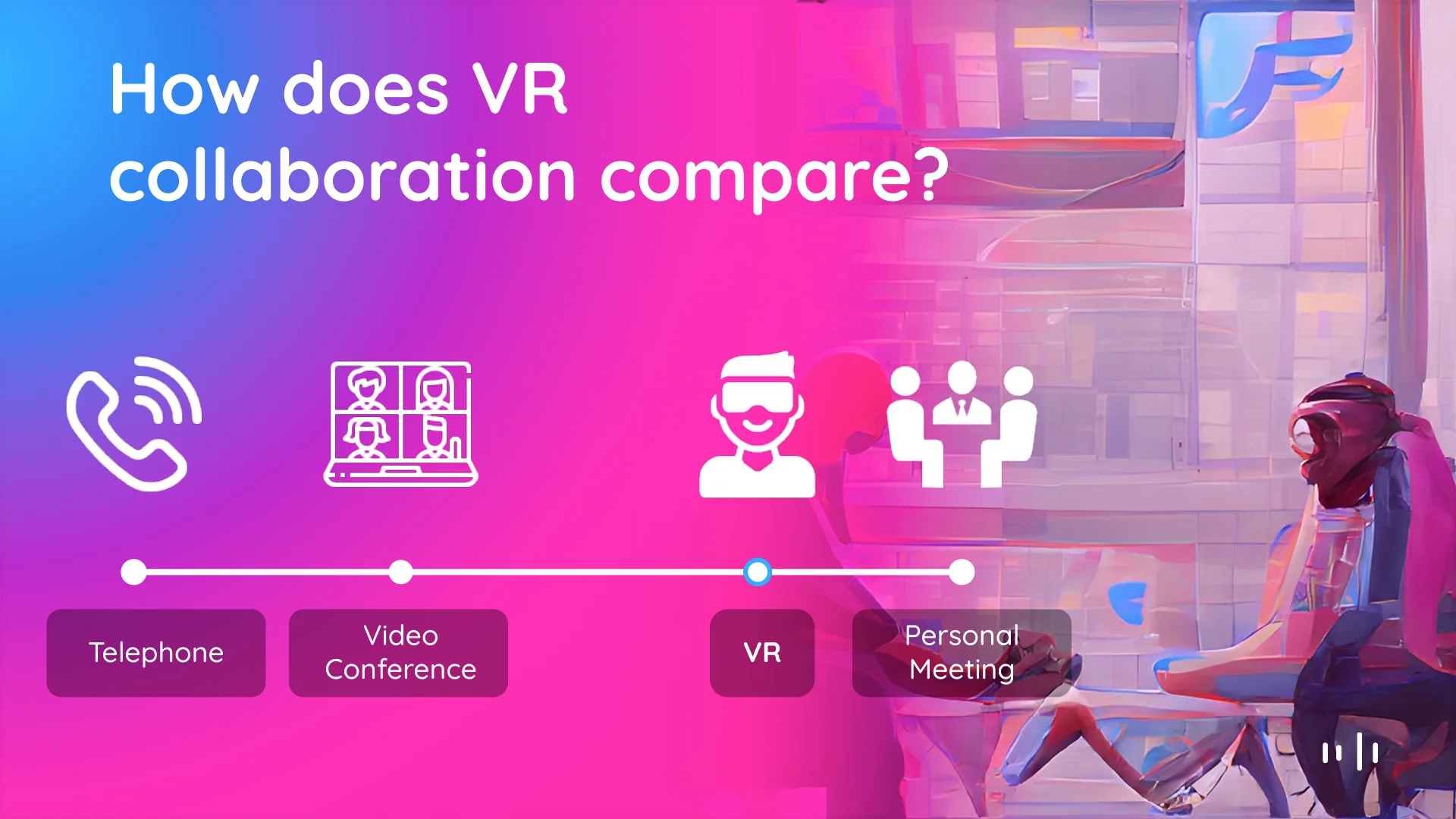
In today’s rapidly evolving corporate landscape, communication methods have diversified significantly. From simple phone calls to immersive Virtual Reality (VR) meetings, each mode of communication serves distinct purposes and offers unique benefits. On a scale of interpersonal communication, VR collaboration slots in between video conferencing and actual real-life personal meetings, with phone calls at the bottom end of the scale. Understanding the appropriate use cases for each communication method is crucial for optimizing efficiency, fostering collaboration, and enhancing interpersonal relationships.
The Spectrum of Communication Methods
1. Phone Calls: Simple and Direct
- Use Case: Confirming Basic Information
- Example: “I received the contract.”
- Strengths: Speed, convenience, minimal setup.
- Limitations: Lack of visual cues, limited engagement, unsuitable for complex discussions.
Phone calls are the quickest way to confirm basic facts or convey simple messages. They are ideal for brief, straightforward communication but fall short when it comes to more nuanced or collaborative discussions.
2. Video Conferencing: Structured and Visual
- Use Case: Fixed Agenda Meetings
- Example: Project status updates, team check-ins.
- Strengths: Visual interaction, screen sharing, structured format.
- Limitations: Limited engagement, potential technical issues, less effective for deep collaboration.
Video conferencing tools like Zoom and Microsoft Teams are well-suited for meetings that follow a fixed agenda. Participants can see each other, share screens, and tick items off a list. However, these tools often lack the depth of interaction needed for truly collaborative or creative sessions.
3. Virtual Reality Meetings: Immersive and Interactive
- Use Case: Collaborative and Creative Discussions
- Example: Interactive workshops, brainstorming sessions.
- Strengths: Immersive environments, interactive tools (big screens, shared whiteboards, 3D objects), enhanced engagement.
- Limitations: Requires VR hardware, learning curve, initial setup costs.
VR meetings provide an immersive environment that bridges the gap between video conferencing and face-to-face meetings. Participants can interact with virtual objects, collaborate on virtual whiteboards, and engage in a more dynamic and creative manner. This makes VR ideal for discussions that require deep collaboration, creativity, and the fostering of interpersonal relationships.
4. Face-to-Face Meetings: Personal and Empathetic
- Use Case: Sensitive and Personal Conversations
- Example: Performance reviews, conflict resolution.
- Strengths: Full range of non-verbal cues, personal connection, effective for sensitive issues.
- Limitations: Logistical challenges, travel time and costs, not always feasible.
Face-to-face meetings remain the gold standard for personal and sensitive discussions. They allow for the full range of non-verbal communication and create a strong personal connection. However, they are not always practical due to logistical constraints.
The Unique Role of VR in Communication
VR occupies a unique position in the communication spectrum, offering a blend of the immersive and interactive elements of face-to-face meetings with the convenience of remote communication. Here are some of the key benefits of VR meetings:
1. Immersive Environments
VR creates a sense of presence that is unmatched by video conferencing. Participants feel as though they are in the same room, which enhances engagement and reduces distractions.
2. Interactive Tools
VR platforms offer a range of interactive tools, including virtual whiteboards, big screens, and 3D objects. These tools enable participants to collaborate in real-time, manipulate virtual objects, and visualize complex concepts.
3. Enhanced Collaboration
The immersive nature of VR fosters deeper collaboration. Participants can work together on complex projects, brainstorm ideas, and prototype solutions in a shared virtual space.
4. Creative Flexibility
VR allows for creative flexibility that is not possible in physical or video conferencing settings. Participants can switch between different virtual environments, from traditional meeting rooms to fantastical landscapes, stimulating creativity and fresh perspectives.
5. Scalability and Accessibility
VR meetings can scale to accommodate large groups without the logistical challenges of physical gatherings. This makes them accessible to participants from around the world, promoting inclusivity and diversity.
Practical Applications of VR Meetings
VR meetings are particularly well-suited for scenarios that require high levels of interaction and creativity. Some practical applications include:
1. Interactive Workshops
VR is ideal for workshops that require participants to engage in hands-on activities. Virtual tools allow for real-time collaboration and interactive learning experiences.
2. Brainstorming Sessions
The dynamic environments and interactive features of VR make it perfect for brainstorming. Participants can visualize ideas, create prototypes, and explore different concepts in a shared space.
3. Team Building
VR can create unique and engaging team-building experiences. Virtual environments can be tailored to challenge teams and promote collaboration in fun and innovative ways.
4. Training and Simulation
VR offers powerful training and simulation capabilities. Employees can practice skills, conduct virtual walkthroughs, and interact with realistic scenarios in a safe and controlled environment.
Conclusion
As communication methods continue to evolve, VR stands out as a powerful alternative that combines the strengths of video conferencing and face-to-face meetings. It offers an immersive, interactive, and flexible platform that enhances collaboration, creativity, and interpersonal relationships. By understanding the unique benefits and appropriate use cases for each communication method, businesses can optimize their interactions and foster a more dynamic and effective working environment. Embracing VR technology is not just a step towards modernity but a leap into a more connected and collaborative future.