

From Horror Show to High Impact: Why VR Collaboration Transforms Remote OKRs
Sean Keogh · 30 Jul 2025 · 2 min read
XR Integration Strategies
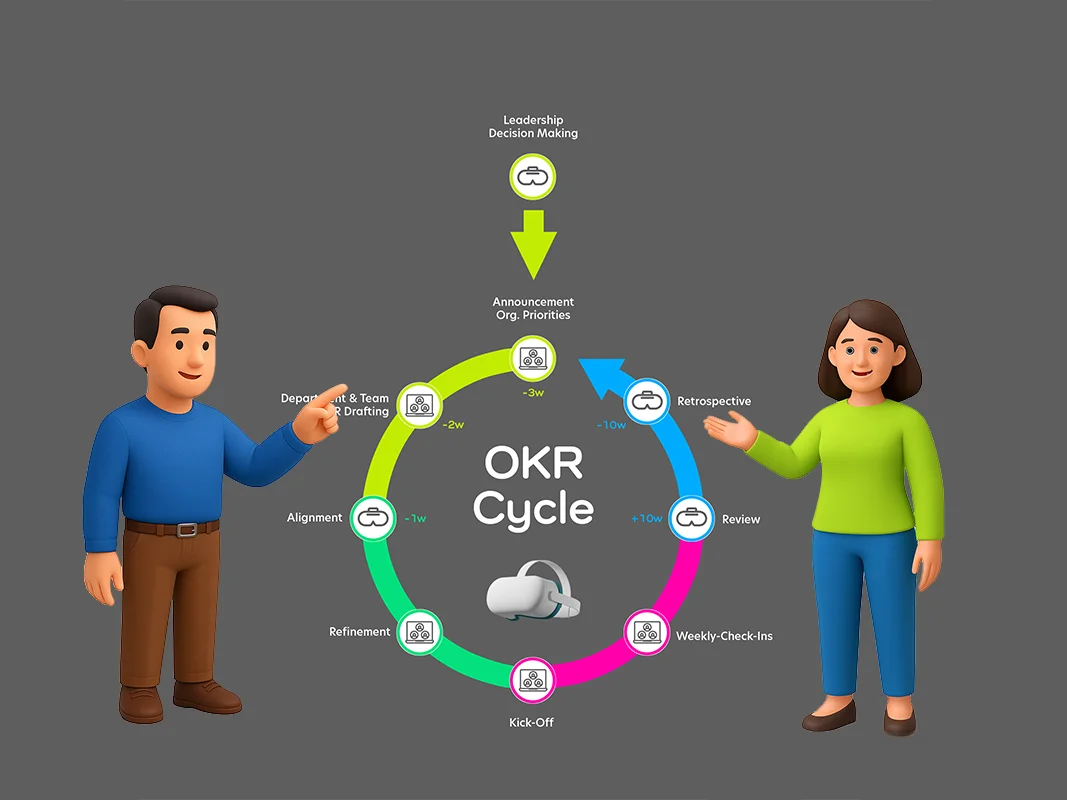
Key parts of the OKR cycle can usefully be transferred to VR
Remote OKR (Objectives and Key Results) sessions should be moments of clarity and alignment for distributed teams. Instead, they often turn into drawn-out video calls with little engagement and even less inspiration. The result? Missed opportunities to connect teams with strategy and unlock high performance.
At headroom, we believe VR collaboration fundamentally changes this dynamic, making OKRs productive, collaborative, and motivational again. Here’s how.
The Problem with Remote OKR Sessions
- Endless video calls cause screen fatigue and disengagement.
- Limited interactivity makes it hard to brainstorm and co-create meaningful goals.
- Leaders dominate conversations while remote team members stay silent.
- Lacks the emotional connection needed to inspire action and commitment.
Without a shared, energising environment, remote OKRs often feel like a ticking-the-box exercise rather than a strategic driver of success.
Why VR Collaboration Fixes This
VR collaboration tools bring distributed teams into shared, lifelike virtual spaces where OKR sessions can flow naturally:
- Immersion: VR breaks the monotony of screens, making participants feel truly present.
- Spatial presence: Allows for fluid, natural communication with non-verbal cues.
- Interactive goal-setting: 3D visual tools enable teams to map OKRs collaboratively.
- Breakout sessions: Small group discussions become seamless and engaging.
- Equal participation: Avatars level the playing field, encouraging contributions from everyone.
Making OKRs Inspirational Again
OKRs are not just about task tracking—they should inspire teams toward a shared vision. VR supports:
- Big-picture thinking: Immersive settings help teams step out of daily routines and see strategic goals clearly.
- Storytelling and visualisation: Objectives come to life through 3D environments and visual aids.
- Emotional connection: Shared virtual spaces create genuine team bonds and collective motivation.
Practical Benefits Beyond Engagement
With VR collaboration:
- Sessions are shorter but more impactful.
- Teams align faster, reducing follow-up meetings.
- Remote participants feel equally involved.
- Travel costs and logistical hurdles disappear.
This means less time in meetings, stronger alignment, and better execution of strategic objectives.
Implementing Virtual Reality for Remote OKRs
Starting with VR collaboration is simpler than you think:
- Select the right platform: Fit for your team size and meeting style.
- Pilot with a small group: Learn what works before scaling.
- Facilitate effectively: Combine proven OKR frameworks with immersive tech.
At headroom, we consult organisations on implementing VR for remote collaboration, ensuring sessions are productive and inspiring—not just another video call.
The Future of Remote Goal-Setting
Remote OKR meetings don’t have to be a horror show. With VR collaboration, they become energising sessions where teams connect with purpose, set ambitious goals, and feel aligned and motivated to deliver.
Curious how VR could transform your OKRs? Book a discovery session with headroom and explore the possibilities.