

A manifesto for a connected future
Sean Keogh · 4 Apr 2024 · 2 min read
XR Integration Strategies
Getting to know one’s remote colleagues suddenly got easier
In an era where the digital fabric of our lives is continuously evolving, the essence of headroom transcends technology itself. We recognize a profound need for authentic connection within the workplace, a need that current tools and awareness have not fully addressed. Our mission is not to merely introduce another technology but to weave a new tapestry of connectivity, illuminating paths to unity that many teams have yet to envision.
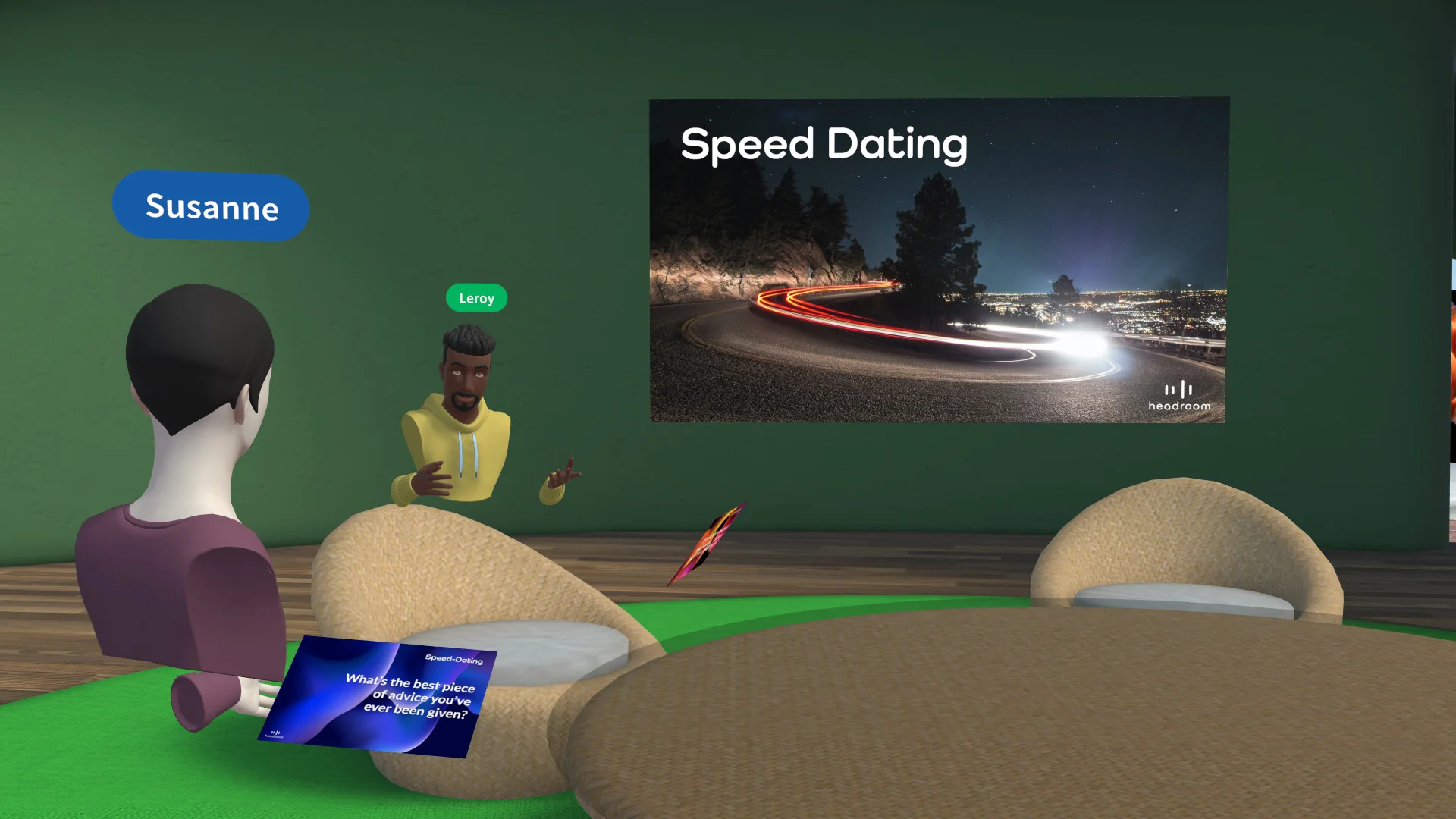
headroom stands as a beacon for those navigating the vast seas of remote and hybrid work environments. We understand that true connection is not about being physically present in the same room but about feeling heard, understood, and valued. Our approach leverages virtual reality not as an end but as a means to create spaces where every interaction becomes more meaningful, where every meeting is an opportunity for genuine collaboration and creativity.
Our offerings—ranging from immersive workshops and team-building exercises to innovative communication platforms—use virtual reality to break the barriers imposed by traditional remote work tools. We challenge the status quo of distant, screen-mediated interactions, replacing them with a sense of personal presence and focus that transforms team dynamics.
headroom is for every team, every department, and every organization that believes in the power of collaboration. We are not confined to the digital boundaries of design teams or tech-centric groups; our vision encompasses all colleagues striving for a deeper connection, regardless of their physical locations. By embracing virtual reality, we unlock a realm of possibilities where the limitations of physical space no longer dictate the depth of our relationships.
Our commitment extends beyond facilitating meetings. We envision a world where even the smallest company can stand tall at international trade fairs, not constrained by physical booths but expanded into virtual realms that convey their message powerfully and expansively. This vision is driven by the belief that effective communication and collaboration are not just about transferring information but about creating shared experiences that resonate on a human level.
Yet, our journey is grounded in realism. We acknowledge the initial resistance that new technologies often face, from the unfamiliarity of virtual environments to the physical sensation of wearing a headset. Our role is to guide teams through these initial hurdles, demonstrating that the essence of natural interaction can be preserved and even enhanced in virtual spaces.
As pioneers in this new frontier, we draw from extensive hands-on experience with teams that have thrived in virtual reality. Our expertise is not theoretical but born from the successes and challenges of real-world implementation. We advocate for the habitual use of virtual reality in business, not as a novelty but as an integral tool for fostering a culture of innovation and adaptability.
In crafting our narrative, we do not merely report on what is possible. We share from a place of deep understanding and practical knowledge, aiming to inspire organizations to explore how virtual reality can elevate their collective experience. Through our work, we aim to make the immersive technology of virtual reality an accessible, intuitive part of everyday interactions, reshaping the landscape of remote collaboration.
Welcome to headroom, where we believe in the power of technology to bring us closer together, to enhance our interactions, and to create a future where distance is no barrier to deep, meaningful collaboration.